
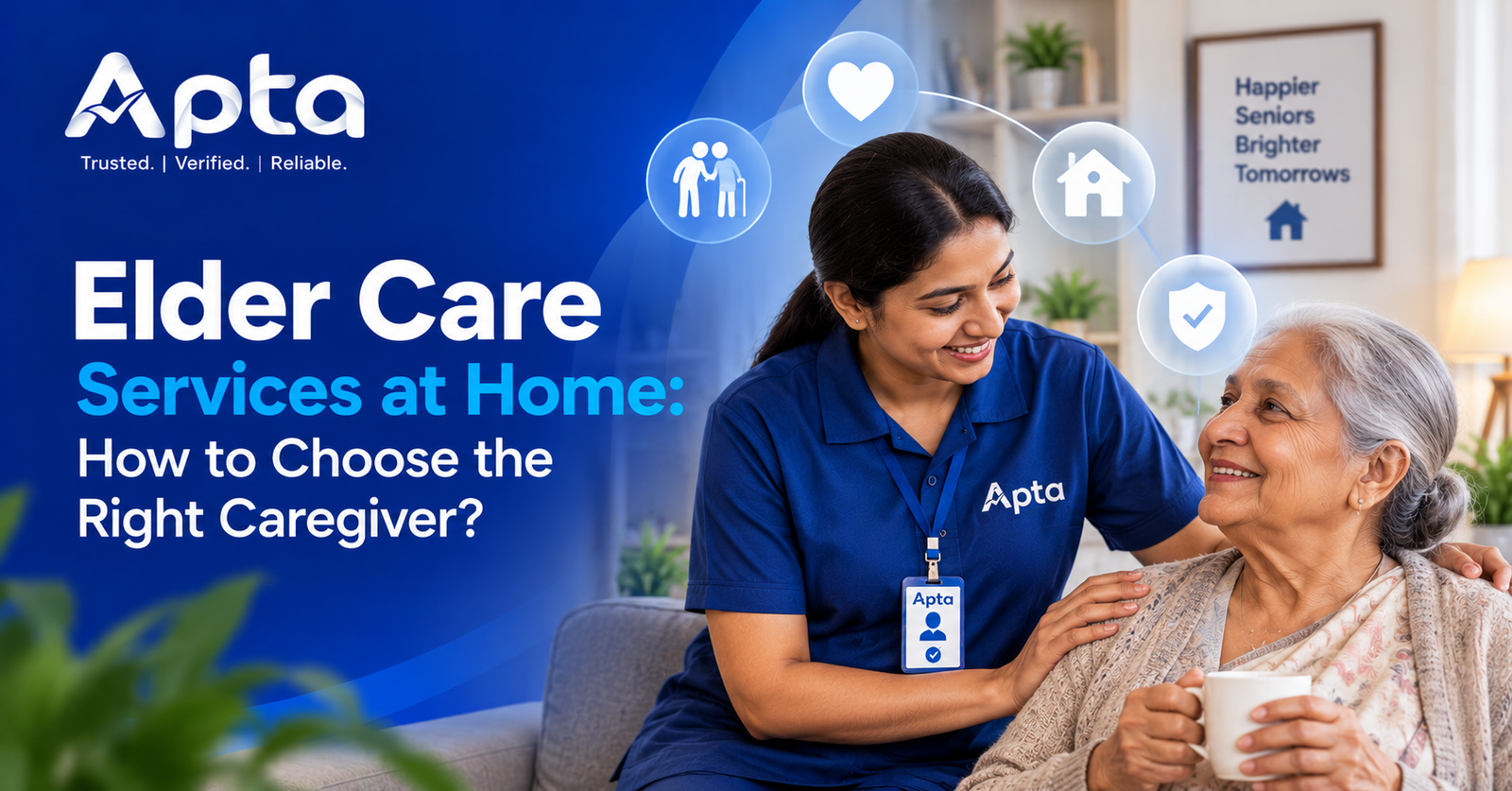
Taking care of an elderly family member is an important responsibility. As parents and grandparents grow older, they may need additional support with everyday activities, mobility, companionship, meals, personal routines or other non-medical needs.
For families managing work, children and other responsibilities, providing this support throughout the day can sometimes become difficult.
This is where elder care services at home can help.
A trained or experienced caregiver can provide assistance with daily routines and offer companionship while helping families manage the practical aspects of senior care.
But choosing the right person is an important decision.
A caregiver may spend several hours with an elderly person and may have access to their home, personal belongings and daily routine. Therefore, families should look beyond availability and price.
They should consider experience, identity, references, reviews, skills, communication, reliability and the specific needs of the elderly person.
This guide explains what to look for when choosing elder care services at home and how to make a more informed decision.
Quick Answer: How Do You Choose Elder Care Services at Home?
Start by understanding exactly what type of support your elderly family member needs.
Then compare caregivers or care professionals based on:
- Relevant experience
- Required skills
- Identity verification
- Background verification where available
- Customer reviews
- References
- Communication skills
- Availability
- Service responsibilities
- Pricing and payment terms
For medical or clinical needs, make sure the person providing care has the appropriate qualifications and authorization for the specific service.
The right caregiver should be someone whose experience, skills, availability and personality match the needs of the elderly person.
What Is Elder Care at Home?
Elder care at home refers to support provided to older adults in their own home.
The exact services can vary depending on the caregiver, agency or professional and the needs of the individual.
Non-medical elder care may include assistance with:
- Daily routines
- Mobility
- Meals
- Personal activities
- Companionship
- Household-related assistance
- Appointments
- Reminders
- Accompanying the elderly person outside
- Basic support for everyday activities
Some families may also require professional healthcare services at home.
These are different from general caregiving and may require appropriately qualified healthcare professionals.
Before hiring anyone, clearly identify what type of care is required.
Why Elder Care at Home Can Be Helpful

Many elderly people prefer staying in a familiar environment.
Home-based support can allow families to arrange assistance while the elderly person continues living in a familiar home setting.
Depending on individual circumstances, home care may provide support with:
Daily Activities
A caregiver can assist with routine activities that may have become difficult.
Companionship
Regular companionship can help reduce loneliness and provide social interaction.
Mobility Support
Some elderly people may need assistance moving around the home or attending appointments.
Household Assistance
Depending on the agreed responsibilities, a caregiver may help with certain routine household tasks.
Family Support
Professional assistance can also help family members manage caregiving responsibilities alongside work and other commitments.
The type and amount of support required will differ from person to person.
10 Things to Check Before Hiring an Elder Caregiver
1. Understand the Senior’s Needs First
Before looking for a caregiver, understand what kind of assistance is actually required.
Ask:
- Does the person need companionship?
- Do they need help with mobility?
- Do they need assistance with meals?
- Do they need help with daily activities?
- Do they need someone to accompany them to appointments?
- Do they require overnight assistance?
- Do they require specialized healthcare support?
The more clearly you understand the requirement, the easier it becomes to find the right professional.
Don’t hire someone for a general role when the family member actually requires specialized care.
2. Check Relevant Experience
Experience matters greatly in elder care.
Working with an elderly person can require patience, communication and an understanding of their daily needs.
Ask about:
- Years of caregiving experience
- Previous elder-care experience
- Experience with mobility assistance
- Experience with elderly people living alone
- Experience with specific care requirements
- Previous responsibilities
- Types of families or patients they have supported
If specialized care is required, check whether the caregiver has appropriate training or qualifications.
3. Check Identity and Verification
Trust is particularly important when someone will regularly enter an elderly person’s home.
Where available, check:
- Mobile verification
- Identity verification
- Address verification
- Selfie verification
- Background verification
- Police verification
- Training certificates
- Relevant professional qualifications
The exact checks required may depend on the type of service.
Most importantly, understand what has actually been verified.
A phone number being verified does not mean that a person’s background or professional qualifications have also been verified.
4. Read Reviews and Feedback
Customer feedback can provide useful information about previous caregiving experiences.
Look for comments about:
- Reliability
- Patience
- Behaviour
- Communication
- Punctuality
- Responsibility
- Cleanliness
- Respect toward elderly people
- Overall service experience
Don’t focus only on the star rating.
Read multiple reviews and look for consistent patterns.
5. Check References Where Appropriate
For long-term or live-in caregiving arrangements, references can be particularly useful.
Ask whether the caregiver can provide appropriate professional references from previous work.
When checking a reference, you can ask about:
- Reliability
- Work responsibilities
- Behaviour
- Attendance
- Communication
- Duration of employment
- Overall experience
Always handle personal information responsibly and use appropriate consent when contacting references.
6. Evaluate Communication Skills
Good communication is extremely important in elder care.
The caregiver may need to communicate with:
- The elderly person
- Family members
- Doctors or healthcare professionals where appropriate
- Other caregivers
- Household members
The caregiver should be able to understand instructions and communicate concerns clearly.
Language can also matter.
If an elderly person is more comfortable speaking a particular language, finding someone who can communicate comfortably with them can make the relationship easier.
7. Check Availability
Care requirements can vary significantly.
Some families may need:
- A few hours per day
- Morning assistance
- Evening assistance
- Full-day support
- Overnight care
- Weekend support
- Temporary care
- Long-term care
Discuss working hours clearly before hiring.
Also clarify what happens if the caregiver is unavailable due to illness, personal commitments or other reasons.
8. Clearly Define Responsibilities
This is one of the most important steps.
Don’t assume that “elder care” includes everything.
Before hiring, discuss exactly what the caregiver is expected to do.
For example:
- Companionship
- Meal assistance
- Mobility support
- Household assistance
- Appointment accompaniment
- Personal care assistance
- Routine reminders
- Overnight presence
For medical tasks, clearly establish whether the caregiver is qualified and authorized to perform them.
Written responsibilities can help prevent misunderstandings later.
9. Discuss Pricing and Payment Terms
Caregiving costs can vary depending on:
- Location
- Number of hours
- Type of care
- Experience
- Specialized skills
- Live-in or live-out arrangement
- Day or night requirements
- Duration of service
Before starting, clarify:
- Hourly or daily rate
- Monthly payment
- Overtime
- Holidays
- Additional responsibilities
- Travel expenses
- Replacement arrangements
- Payment schedule
For long-term arrangements, having clear payment terms can help both the family and caregiver.
10. Consider Personality and Compatibility
Experience is important, but personality also matters.
An elderly person may spend several hours every day with the caregiver.
A good match can make the experience much more comfortable.
Look for qualities such as:
- Patience
- Respect
- Empathy
- Good communication
- Calm behaviour
- Reliability
- Responsibility
If possible, allow the elderly person to participate in the decision.
Their comfort and preferences matter.
Elder Care vs Patient Care: What’s the Difference?

The terms elder care and patient care are sometimes used interchangeably, but they can refer to different requirements.
Elder Care
Elder care generally focuses on supporting older adults with daily activities, companionship, mobility and other routine needs.
Patient Care
Patient care can involve someone recovering from an illness, surgery, injury or other medical condition.
Depending on the situation, patient care may require trained healthcare professionals.
For example, certain medical tasks should only be performed by appropriately qualified professionals.
Therefore, families should clearly identify whether they need:
General caregiving support
or
Professional medical or nursing care.
Choosing the right category can help ensure that the person providing the service has the appropriate skills.
When Should You Consider Professional Medical Care?
Some situations may require more than a general caregiver.
Professional healthcare support may be appropriate when an individual requires specialized assistance related to a medical condition or recovery.
Examples can include situations involving:
- Post-hospital recovery
- Specialized nursing requirements
- Wound care
- Medical equipment
- Clinical monitoring
- Rehabilitation
- Other healthcare needs
The appropriate professional will depend on the individual’s condition and the recommendations of their healthcare provider.
A general caregiver should not be expected to perform medical procedures they are not qualified to perform.
Questions to Ask an Elder Caregiver Before Hiring
Before hiring someone, ask practical questions such as:
1. How much experience do you have with elderly people?
2. What type of caregiving have you done before?
3. What responsibilities are you comfortable handling?
4. Do you have any relevant training or certificates?
5. Are you comfortable assisting with mobility?
6. What are your available working hours?
7. Can you provide references from previous work?
8. Are you comfortable working with family members?
9. What happens if you are unavailable?
10. What are your expected charges?
If specialized medical care is required, ask specifically about the professional’s qualifications and scope of practice.
How to Make an Elderly Person Comfortable With a New Caregiver
Hiring the right caregiver is only the beginning.
The elderly person may initially feel uncomfortable with someone new entering their home.
You can make the transition easier by:
- Introducing the caregiver gradually
- Explaining the caregiver’s role
- Allowing the elderly person to ask questions
- Discussing their daily preferences
- Maintaining familiar routines
- Encouraging respectful communication
- Giving the elderly person reasonable choices
The goal should be to create a relationship based on respect, comfort and trust.
What Families Should Discuss Before the First Visit
Before the caregiver starts, prepare important information.
This can include:
- Emergency contact numbers
- Family contact details
- Important household information
- Daily routine
- Food preferences
- Mobility considerations
- Appointment schedule
- Areas of the home they need access to
- Responsibilities of the caregiver
Avoid sharing unnecessary sensitive information.
Only provide access to information and areas of the home that are relevant to the caregiver’s responsibilities.
Home Safety for Elderly People
The home environment itself is also important.
Families can review common safety concerns such as:
- Slippery floors
- Poor lighting
- Cluttered walkways
- Loose rugs
- Difficult-to-reach items
- Unsafe bathroom areas
- Unstable furniture
Simple improvements may make daily movement easier and reduce avoidable risks.
For significant mobility or medical concerns, families should seek appropriate professional advice.
What Should Family Members Monitor?
Even after hiring a caregiver, family members should remain involved.
Regularly check:
- Whether agreed responsibilities are being completed
- Whether the elderly person is comfortable
- Whether communication is working
- Whether schedules are being followed
- Whether there are any concerns
- Whether the caregiver needs additional support
A caregiver can provide valuable assistance, but family involvement remains important.
Red Flags to Watch Out For
Families should take concerns seriously if a caregiver:
- Refuses to provide basic professional information
- Becomes aggressive or disrespectful
- Repeatedly misses scheduled visits
- Changes agreed payment terms without explanation
- Refuses to explain their responsibilities
- Attempts to access unrelated areas of the home
- Requests unnecessary personal information
- Ignores reasonable instructions
- Behaves in a way that makes the elderly person uncomfortable
One concern doesn’t automatically prove misconduct.
However, repeated or serious concerns should be addressed promptly.
What If an Elderly Person Complains About the Caregiver?
Listen carefully.
An elderly person’s concerns should not automatically be dismissed.
Ask what happened and understand the situation from their perspective.
Depending on the circumstances:
- Speak with the caregiver.
- Review the agreed responsibilities.
- Contact the service platform if applicable.
- Consider changing the caregiver.
- Escalate serious safety concerns appropriately.
The comfort and safety of the elderly person should remain a priority.
Why Trust Matters More in Elder Care
Every service requires trust.
But elder care can require an even deeper level of trust because the caregiver may spend significant time with an elderly person and may have access to their home and daily routine.
Families should therefore have access to meaningful information before making a decision.
A useful professional profile can include:
- Identity
- Experience
- Skills
- Reviews
- Ratings
- Service area
- Availability
- Verification information
- Relevant qualifications
This gives families more information to consider before hiring.
How Apta Can Help Families Find Care Professionals
Apta is being built to make it easier for people to discover and connect with local service professionals.
For elder care and patient care services, professional profiles can help families understand important information before contacting someone.
Depending on the professional and service, this may include:
- Experience
- Skills
- Ratings
- Reviews
- Service areas
- Availability
- Verification information
- Relevant professional credentials
Apta’s approach is focused on making local service discovery more transparent.
For families looking for elder care, patient care or other home services, the goal is simple:
Know who you’re hiring before you hire them.
How to Choose the Right Elder Care Professional
There is no single caregiver who is perfect for every family.
The right choice depends on the individual’s needs.
Before making a decision, consider:
Need: What type of support is required?
Experience: Has the professional handled similar responsibilities?
Skills: Do they have the skills required?
Trust: What identity and verification information is available?
Reviews: What do previous customers say?
Availability: Can they provide care at the required times?
Compatibility: Is the elderly person comfortable with them?
Cost: Are the payment terms clear?
The best caregiver is the one who fits the person’s actual needs—not simply the person with the lowest price.
Final Elder Care Hiring Checklist
Before hiring an elder care professional, check:
☐ Understand the elderly person’s needs
☐ Check relevant experience
☐ Check required skills
☐ Review identity information
☐ Check available verification
☐ Read customer reviews
☐ Ask for references where appropriate
☐ Discuss working hours
☐ Define responsibilities
☐ Discuss pricing
☐ Check relevant qualifications for specialized care
☐ Consider language and communication
☐ Introduce the caregiver gradually
☐ Keep emergency contacts available
☐ Review the service regularly
Frequently Asked Questions
What are elder care services at home?
Elder care services at home provide support to older adults in their own homes. Depending on the service, this may include companionship, mobility assistance, help with daily routines and other non-medical support.
How do I find a reliable caregiver for an elderly person?
Compare caregivers based on relevant experience, skills, reviews, identity verification, references, availability, communication and pricing. The caregiver should also be a good personal fit for the elderly person.
What is the difference between elder care and patient care?
Elder care generally focuses on supporting older adults with everyday activities and companionship, while patient care may involve supporting someone recovering from an illness, injury, surgery or medical condition. Patient care may require appropriately qualified healthcare professionals.
Does an elder caregiver provide medical care?
Not necessarily. General caregivers may provide non-medical assistance. Medical or clinical tasks should be performed by appropriately qualified professionals.
How much does elder care cost in India?
Costs vary depending on location, number of hours, type of care, experience, specialized requirements and whether the service is live-in or live-out. Discuss pricing and responsibilities before starting the service.
What should I ask an elderly caregiver before hiring them?
Ask about their experience, previous responsibilities, relevant training, availability, references, expected duties, charges and experience with similar elderly care requirements.
Should family members stay involved after hiring a caregiver?
Yes. Regular communication with the elderly person and caregiver can help families understand whether the arrangement is working well and whether any concerns need attention.
How can I make an elderly person comfortable with a new caregiver?
Introduce the caregiver gradually, explain their responsibilities and allow the elderly person to communicate their preferences. Respect and patience are important when establishing a new caregiving relationship.
What should I do if an elderly person is uncomfortable with the caregiver?
Listen to their concerns and understand what is making them uncomfortable. Discuss the issue appropriately and consider changing the caregiver if the concern cannot be resolved.
Conclusion
Choosing elder care services at home is an important decision.
The right caregiver can provide valuable support with daily activities, companionship and other responsibilities while helping families manage their caregiving commitments.
But the decision should not be based only on price or availability.
Before hiring, check experience, skills, identity, verification, reviews, references, communication, availability and responsibilities.
For medical or specialized care, make sure the professional has the appropriate qualifications for the service required.
Most importantly, remember that elder care is about a person—not just a service.
The caregiver should be someone who treats the elderly person with patience, dignity, respect and care.
Apta is being built to make it easier for families to discover professionals and make more informed decisions about the people they invite into their homes.
Trusted. Verified. Reliable.