
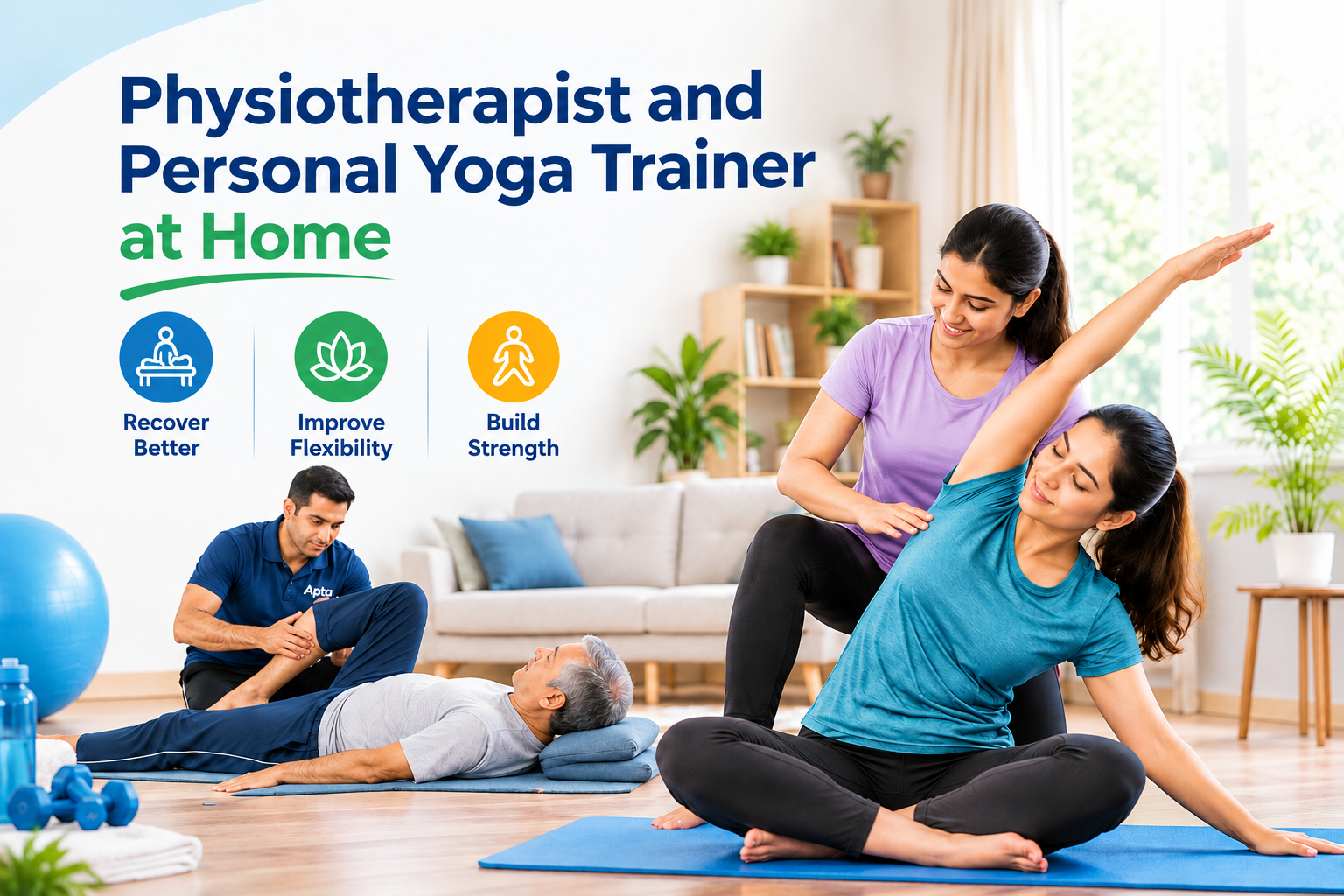
Physiotherapist at Home services can make it easier to receive personalized support for mobility, recovery, and physical fitness. Whether you need help managing movement difficulties or want to improve your flexibility, a qualified physiotherapist can guide you according to your needs. If your goal is to build a regular fitness routine, a personal yoga trainer at home can also help you practice suitable yoga postures and breathing techniques in a comfortable environment.
Physiotherapy and yoga serve different purposes, but both can play an important role in maintaining an active lifestyle. A physiotherapist helps assess movement difficulties, manage pain, and guide rehabilitation exercises, while a personal yoga trainer helps you practice suitable yoga postures, breathing techniques, and relaxation exercises.
Having these professionals visit your home also makes it easier to follow a routine that fits your daily schedule. You can receive individual attention, practice in a familiar environment, and work towards goals that match your physical condition and fitness level.
Why Choose a Physiotherapist and Personal Yoga Trainer at Home?
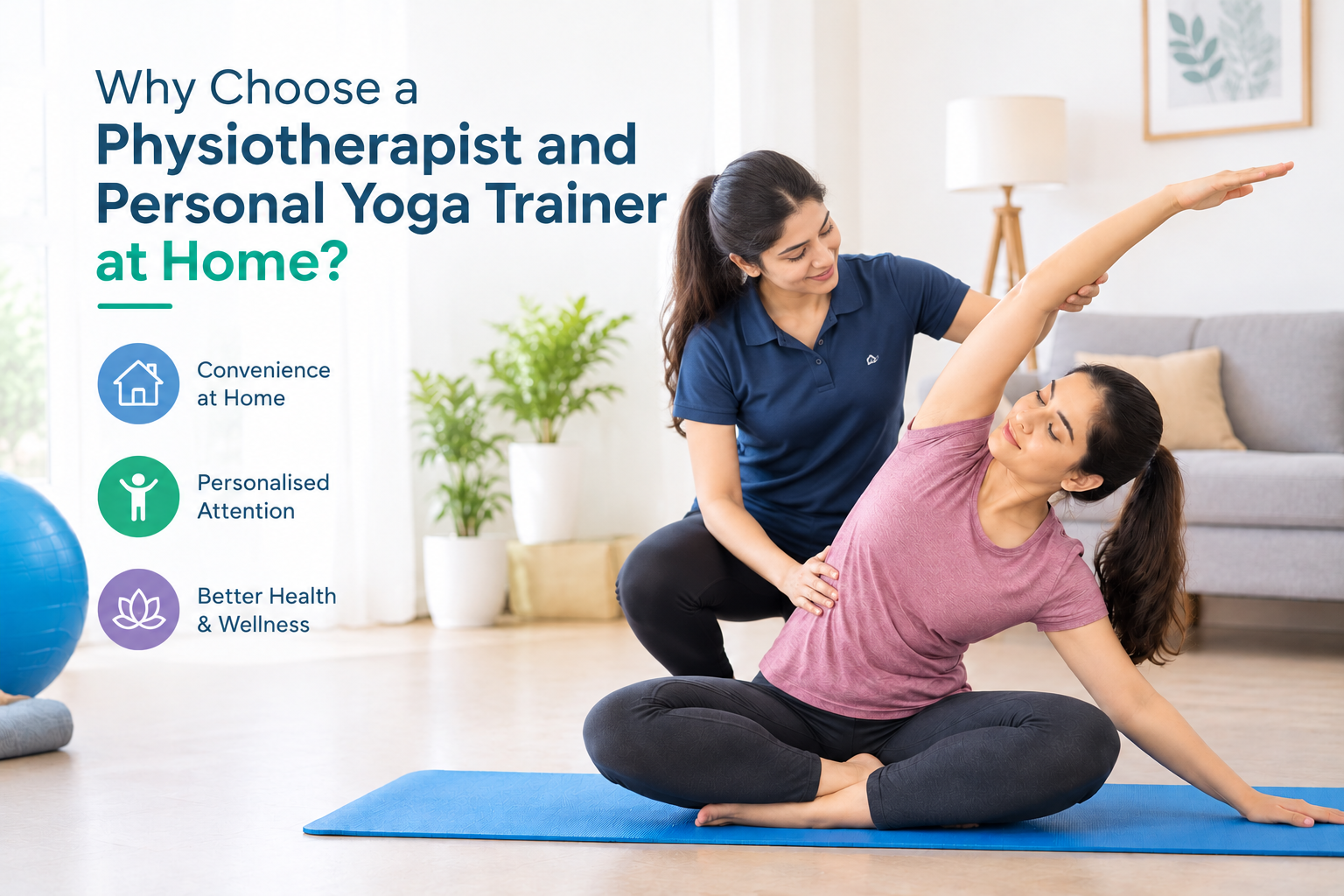
Home-based support can be especially helpful for older adults who need assistance with mobility, daily activities, or maintaining an active routine. Families looking for additional support for ageing loved ones can also explore elder care services at home to understand the different care options available for their needs.
1. Personalized Attention
Everyone has different physical needs. Some people want to improve their posture after spending long hours at a desk, while others may need support with mobility after an injury or surgery. A professional can tailor the session according to your needs and current abilities.
A physiotherapist assesses your movement, strength, and functional limitations before recommending appropriate exercises. Similarly, a personal yoga trainer can adjust postures and routines according to your flexibility, experience, and comfort level.
2. Convenience and Comfort
Travelling to a clinic or yoga studio may be difficult when you have a packed schedule, mobility challenges, or family responsibilities. Home sessions reduce travel time and allow you to exercise in a comfortable and familiar space.
This arrangement can be especially helpful for older adults, people recovering from certain injuries, and individuals who prefer one-to-one sessions.
3. Better Consistency
Consistency matters when building a fitness habit or following a rehabilitation programme. When professional support is available at home, it may become easier to maintain a regular schedule.
Your trainer or physiotherapist can help you understand which exercises to practice, how to perform them safely, and how to make gradual progress without pushing beyond your current abilities.
Physiotherapy Services Available at Home
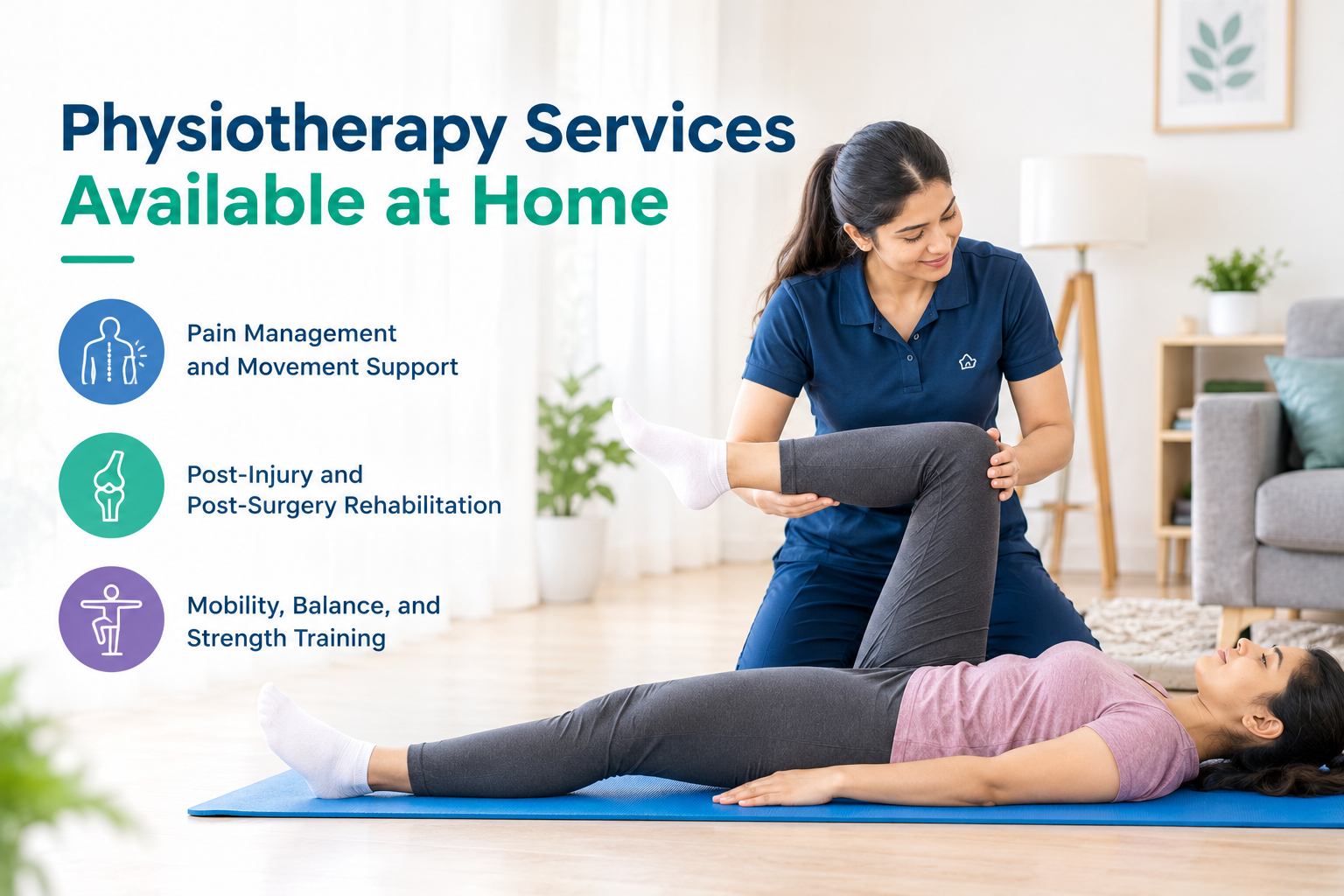
Physiotherapy focuses on improving movement, strength, balance, and everyday physical function. Depending on your condition, a qualified physiotherapist may recommend supervised exercises, movement training, or other appropriate treatment techniques.
1. Pain Management and Movement Support
Muscle stiffness, joint discomfort, and restricted movement can affect daily activities such as walking, climbing stairs, or sitting for long periods. Physiotherapy may help address these difficulties by identifying contributing factors and creating a suitable treatment plan.
Common Reasons to Consider Physiotherapy
- Persistent muscle or joint discomfort
- Difficulty moving a shoulder, knee, or other joint
- Stiffness after a period of inactivity
- Movement difficulties following an injury
- Reduced strength or balance
- Rehabilitation after surgery, when medically appropriate
The right treatment depends on the underlying cause of the problem. Seek medical assessment when pain is severe, unexplained, worsening, or accompanied by concerning symptoms.
2. Post-Injury and Post-Surgery Rehabilitation
Recovering from an injury or surgery may require additional support with everyday activities. Along with following your rehabilitation plan, learning about patient care services at home can help you understand the different care options available for people who need assistance during recovery.
How Home Rehabilitation Can Help
A physiotherapist may help you practice safe movements, gradually rebuild strength, and improve your ability to perform everyday tasks. They can also explain which activities to avoid during particular stages of recovery.
Always follow your surgeon’s or treating doctor’s advice about when rehabilitation should begin and which movements are permitted.
3. Mobility, Balance, and Strength Training
Good mobility and balance are important for daily independence. Physiotherapy exercises may focus on improving coordination, strengthening muscles, and making everyday movements easier.
This type of support can be useful for older adults and people whose strength or balance has changed because of illness, injury, or reduced activity.
Personal Yoga Trainer at Home: What Can You Expect?
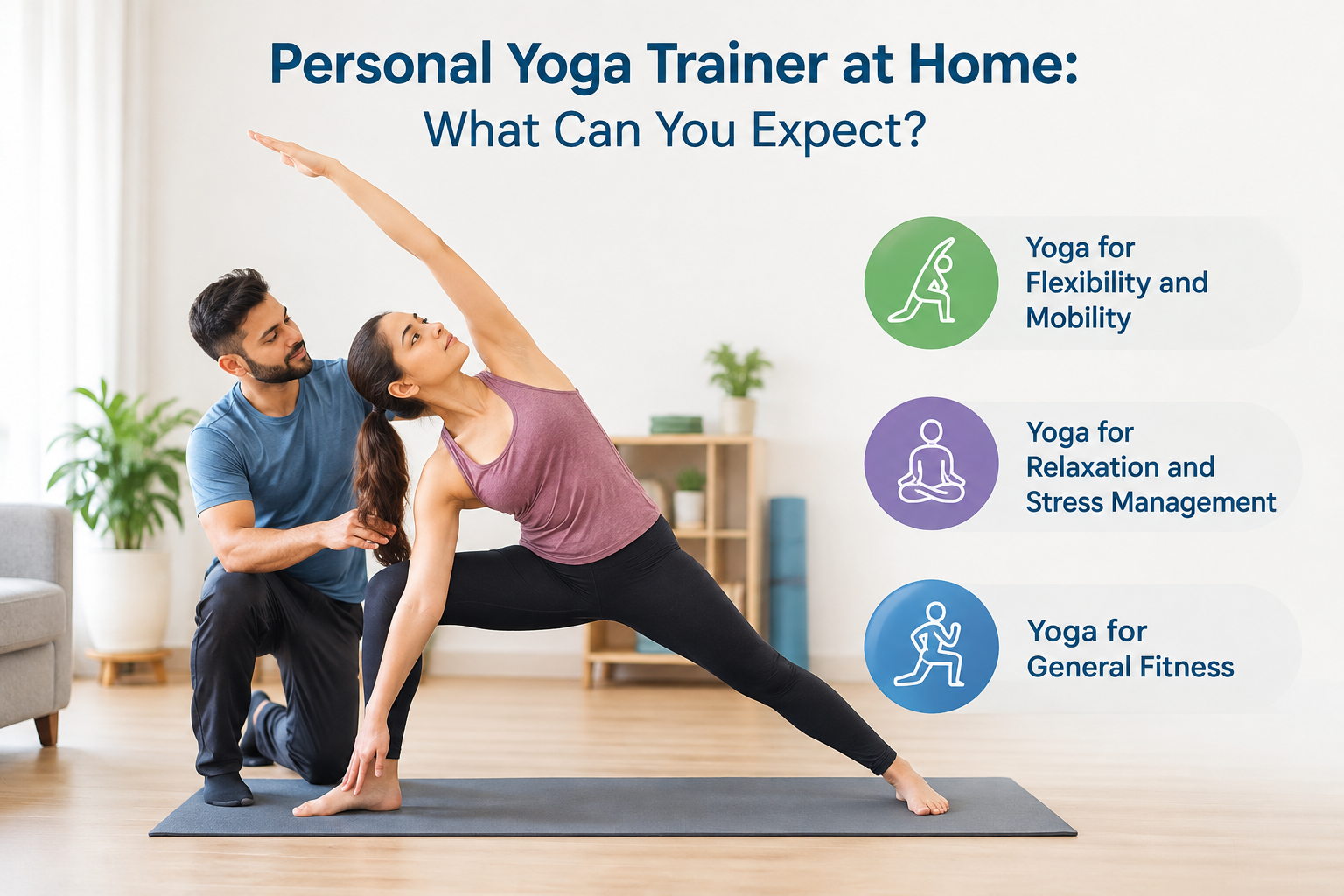
Yoga combines physical postures, controlled breathing, and relaxation practices. With individual guidance, your sessions can be adapted to your goals, experience, and comfort level.
A personal yoga trainer can help you learn correct techniques, develop a regular routine, and understand how to modify postures when needed.
1. Yoga for Flexibility and Mobility
Long hours of sitting and limited physical activity can leave the body feeling stiff. Suitable yoga movements may help improve flexibility and support a greater range of comfortable movement over time.
A trainer may introduce gentle stretches, standing postures, and mobility exercises based on your ability. Beginners should start slowly rather than attempting advanced postures without guidance.
2. Yoga for Relaxation and Stress Management
Daily responsibilities, work pressure, and irregular sleep can make it difficult to relax. Gentle yoga, breathing exercises, and guided relaxation may help some people feel calmer and more aware of their breathing and body.
Practices a Yoga Trainer May Include
- Gentle warm-up movements
- Beginner-friendly yoga postures
- Guided breathing techniques
- Relaxation and mindfulness exercises
- Cool-down stretches
Your routine should be adjusted if you experience discomfort, dizziness, or breathing difficulties. A yoga trainer should also understand when a posture needs to be modified or avoided.
3. Yoga for General Fitness
Yoga can be part of a broader fitness routine that supports flexibility, balance, body awareness, and muscular endurance. The level of physical challenge depends on the style of yoga and the postures included.
A personal trainer can help you establish realistic goals, whether you are beginning your fitness journey or returning to exercise after a break.
Yoga is not a replacement for medical treatment or prescribed rehabilitation. If you have an existing injury or medical condition, consult an appropriate healthcare professional before starting a new routine.
Physiotherapy vs. Personal Yoga Training: Which Do You Need?
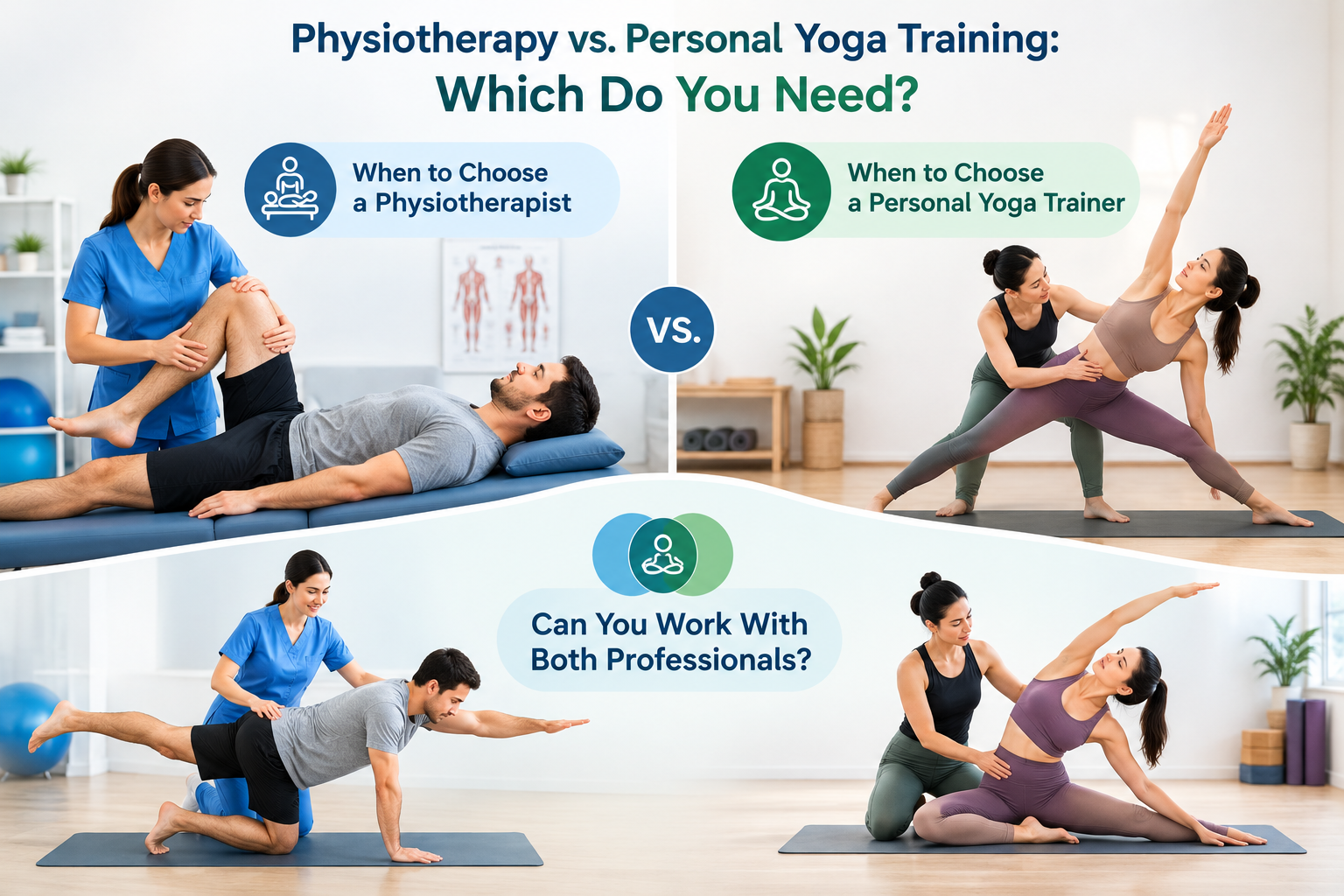
Although physiotherapy and yoga may include movement and stretching, they are not interchangeable. Understanding their differences can help you choose the right professional.
When to Choose a Physiotherapist
Consider consulting a qualified physiotherapist if you have movement limitations, are recovering from an injury or operation, or need help with a physical problem that requires assessment and rehabilitation.
A physiotherapist can evaluate your condition and determine whether exercises, manual techniques, education, or referral for further medical care are appropriate.
When to Choose a Personal Yoga Trainer
A personal yoga trainer may be a suitable option if your main goals are improving flexibility, learning yoga postures, developing a consistent exercise routine, or practicing relaxation techniques.
Choose a trainer who understands your experience level and can offer appropriate modifications rather than encouraging you to push through pain.
Can You Work With Both Professionals?
Some people may benefit from both physiotherapy and yoga, depending on their health and fitness goals. For example, a person may follow a physiotherapy programme for a specific movement problem and later include suitable yoga practices as part of general fitness.
However, combining the two should be done thoughtfully. A physiotherapist can advise whether particular yoga movements are suitable during recovery, and your yoga trainer should be aware of any restrictions relevant to your practice.
How to Find the Right Physiotherapist or Yoga Trainer at Home

Choosing the right professional is important for your comfort, safety, and progress. Before arranging a session, take some time to check their qualifications, experience, and approach.
1. Check Qualifications and Experience
For physiotherapy, look for an appropriately qualified professional who is registered or recognized as required by applicable regulations. Ask about their experience with your specific concern, such as post-operative rehabilitation, mobility training, or sports injuries.
For yoga, check the trainer’s training, teaching experience, and familiarity with the style of yoga you want to practice.
2. Explain Your Goals Clearly
Before your first session, explain what you want to achieve. Your goals may include improving movement, following a rehabilitation plan, becoming more flexible, or building a regular exercise habit.
Clear communication helps the professional decide whether their services match your needs and what an appropriate starting point might look like.
3. Discuss Session Timings and Fees
Ask about session duration, frequency, travel charges, cancellation policies, and the overall cost. Some professionals offer individual sessions, while others may provide packages for multiple visits.
Choose an arrangement that suits your budget and allows you to follow the recommended routine consistently.
4. Ask About Safety and Progress Tracking
A professional should explain the purpose of your exercises and show you how to perform them correctly. They should also be willing to modify activities when necessary.
For physiotherapy, ask how progress will be assessed and when the treatment plan may need to change. For yoga, discuss suitable modifications, physical limitations, and ways to progress gradually.
Preparing Your Home for a Session

A little preparation can make home sessions more comfortable and productive. You do not need a dedicated gym or yoga studio, but a clean, well-ventilated area with enough space to move is helpful.
What You May Need
- A stable chair, if recommended for support
- A yoga mat for suitable floor exercises
- Comfortable clothing that allows movement
- Drinking water
- Any prescribed support equipment recommended by your healthcare professional
Keep the exercise area free of loose rugs, clutter, and slippery objects. Tell your professional about any recent injuries, medical advice, movement restrictions, or symptoms that could affect your session.
Do not purchase specialist equipment unless your professional confirms that it is necessary for your routine.
Common Mistakes to Avoid During Home Fitness and Rehabilitation
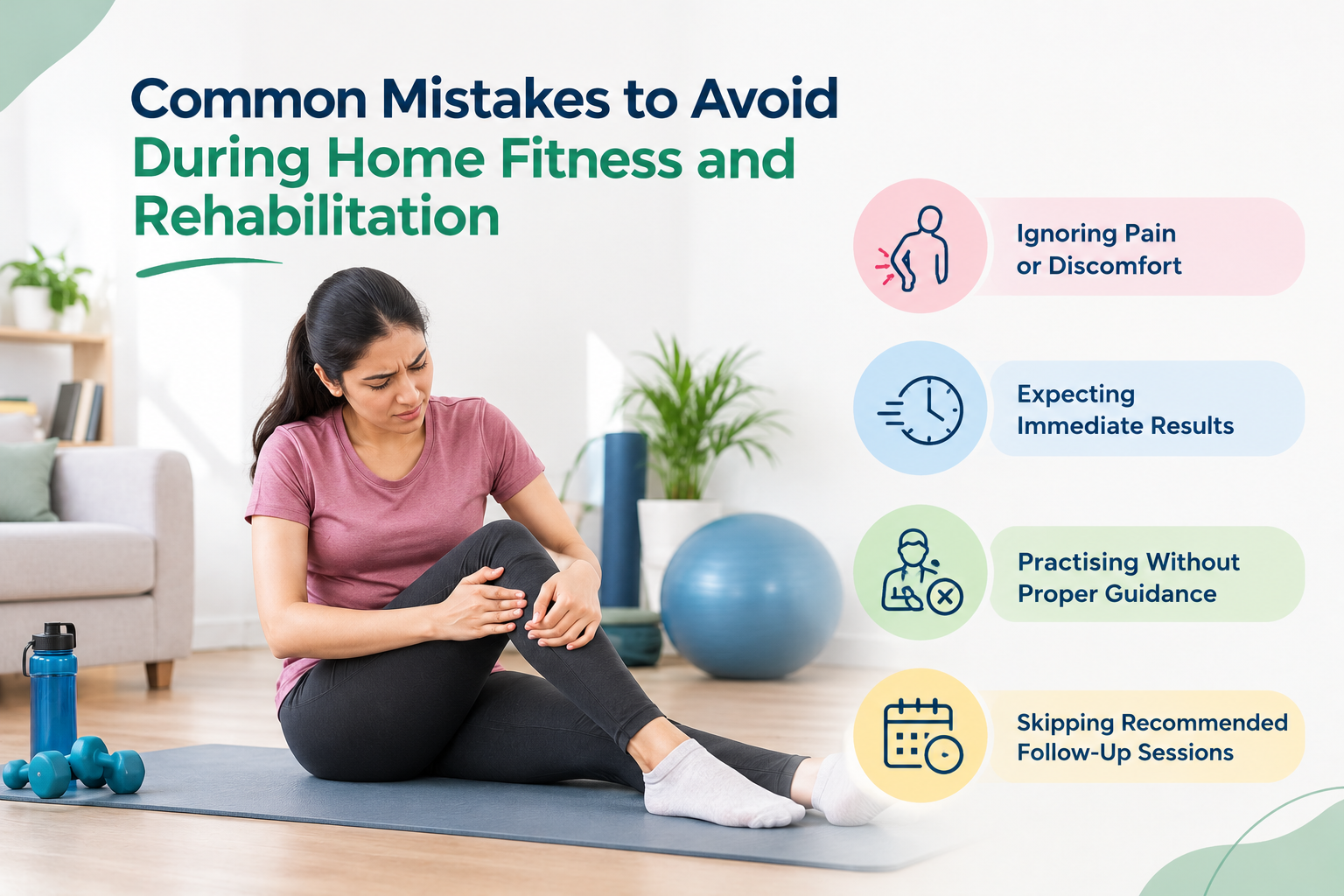
Home sessions offer convenience, but safe practice still matters. Avoiding a few common mistakes can help you get more from your time with a professional.
Ignoring Pain or Discomfort
Exercise should not involve forcing a painful movement. Tell your physiotherapist or yoga trainer if an activity causes discomfort so they can assess whether it should be modified or stopped.
Expecting Immediate Results
Improvements in strength, mobility, flexibility, and fitness usually take time. Progress depends on the underlying condition, the consistency of practice, and other individual factors.
Follow the recommended plan and discuss any concerns rather than increasing the difficulty too quickly.
Practising Without Proper Guidance
Copying advanced exercises or yoga postures from online videos may not be suitable for your body or current condition. Individual guidance is particularly important when you have an injury, balance difficulties, or movement restrictions.
Skipping Recommended Follow-Up Sessions
If you are following a rehabilitation plan, attend recommended follow-ups and ask questions when something is unclear. Your professional may need to adjust your exercises as your abilities or symptoms change.
Find Physiotherapists and Yoga Trainers on the Apta

Finding the right service provider should not make your daily routine more complicated. The APTA Android app provides a convenient way to explore service options and connect with service providers for your requirements.
Whether you are looking for a physiotherapist at home or a personal yoga trainer at home, you can use the app to explore available options and identify a provider who suits your needs.
Before choosing a professional, review their qualifications, relevant experience, service details, and availability. Confirm the service arrangements directly with the provider before booking.
Final Thoughts
Taking care of your physical health becomes easier when you have the right professional guidance and a routine that fits your lifestyle. Whether you need physiotherapy to improve mobility and support recovery or a personal yoga trainer to work on flexibility, balance, and overall fitness, choosing a professional according to your needs is an important first step.
With the Apta you can explore physiotherapy and personal yoga training services to find options that suit your needs. Take a step towards a healthier, more active lifestyle by choosing the right support for your wellness journey.
Home sessions offer the convenience of receiving individual attention in a familiar environment while helping you stay consistent with your goals. Before getting started, check the professional’s qualifications, discuss your expectations, and follow the recommended exercises at a comfortable pace.
Frequently Asked Questions
1. Can I hire a physiotherapist at home?
Yes. Some physiotherapists provide home visits for assessment and treatment, depending on your location, condition, and their availability. Confirm their qualifications and whether home-based care is appropriate for your needs.
2. Is a personal yoga trainer at home suitable for beginners?
Yes. A personal yoga trainer can teach basic postures, breathing techniques, and relaxation practices at a pace suited to your experience. Tell the trainer about any injuries or physical limitations before starting.
3. How often should I book physiotherapy sessions at home?
The recommended frequency depends on your condition, treatment goals, and recovery plan. Your physiotherapist can suggest a suitable schedule after assessing your needs.
4. Can yoga help improve flexibility?
Regular, appropriately selected yoga practice may improve flexibility and range of motion over time. Results vary, and postures should be adapted to your abilities rather than forced.
5. Can physiotherapy and yoga be done together?
They may be combined when appropriate. If you are receiving treatment for an injury or medical condition, ask your physiotherapist or treating doctor which yoga movements are suitable for you.